























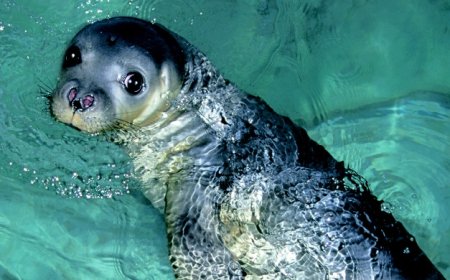












What is a harbor seal?
Seals share a common ancestor with dogs and bears, and their arms and legs are hidden under their skin. Only their hands and feet protrude from their body covering.

Pacific harbor seals are the most common marine mammal in Puget Sound, and their population is healthy.
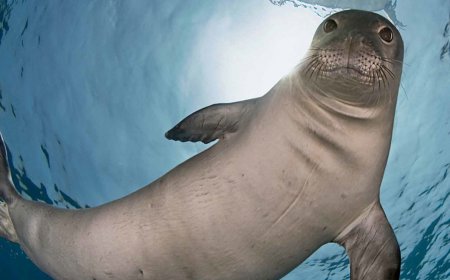
Seals have large eyes that allow them to see in dark, deep waters. They have long necks, which enable them to reach fish quickly while swimming.
Harbor seals are generalist feeders that capture a wide variety of fish, cephalopods, and crustaceans from surface, mid-water, and benthic habitats. Their diet is highly diverse, with variations among individuals from different populations and regions, and prey abundance also fluctuating with seasonal and intraspecific changes.
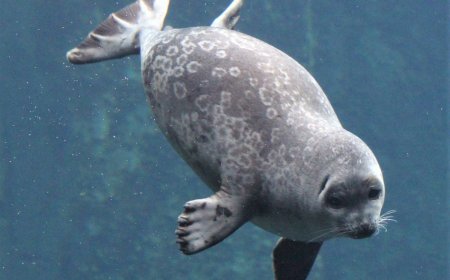
Hair seals (Phoca vitulina) are seals of the family Phocidae, sometimes called harbor seals or fur seals. They are covered in short, stiff, bristle-like hairs. Their coloration varies, but two basic patterns are common: light gray flanks and a dark-spotted or blotched belly, or a dark background with light rings. They are distinguished from other pinnipeds, such as fur seals and sea lions, by the absence of external ear lobes. Only a small opening (the external auricle, or ear canal opening) is visible on each side of their head. On land, harbor seals move clumsily, like caterpillars, due to the fusion of their pelvic bones, which prevents them from moving their hind flippers under their rumps. In the water, they are graceful and efficient swimmers, using their front flippers as rudders and their hind flippers to propel themselves forward by bringing their hind flippers together, spreading their webbed toes, and moving their large hind flippers to the side.
They can swim soon after birth. They typically stay with their mothers for about a month, after which they are weaned and separated. At this point, more than half of their body weight may be composed of fat, allowing them to begin to be self-sufficient. Sexual maturity occurs between 3 and 7 years of age. Adult females mate shortly after weaning their pups. Embryonic development is suspended for approximately 11 weeks, a characteristic known as embryonic diapause (i.e., delayed implantation). Active fetal development lasts for approximately 8.5 months. The birth of harbor seal pups is not limited to a few large colonies (as is the case with many pinniped species) but occurs in many locations. Harbor seals have a nearly equal sex ratio at birth, which is maintained until approximately 5 years of age. After this, male mortality is high, and females are relatively more numerous. The maximum estimated lifespan, based on the annual rings in their teeth, is 26 years for males and 35 years for females.
What's Your Reaction?